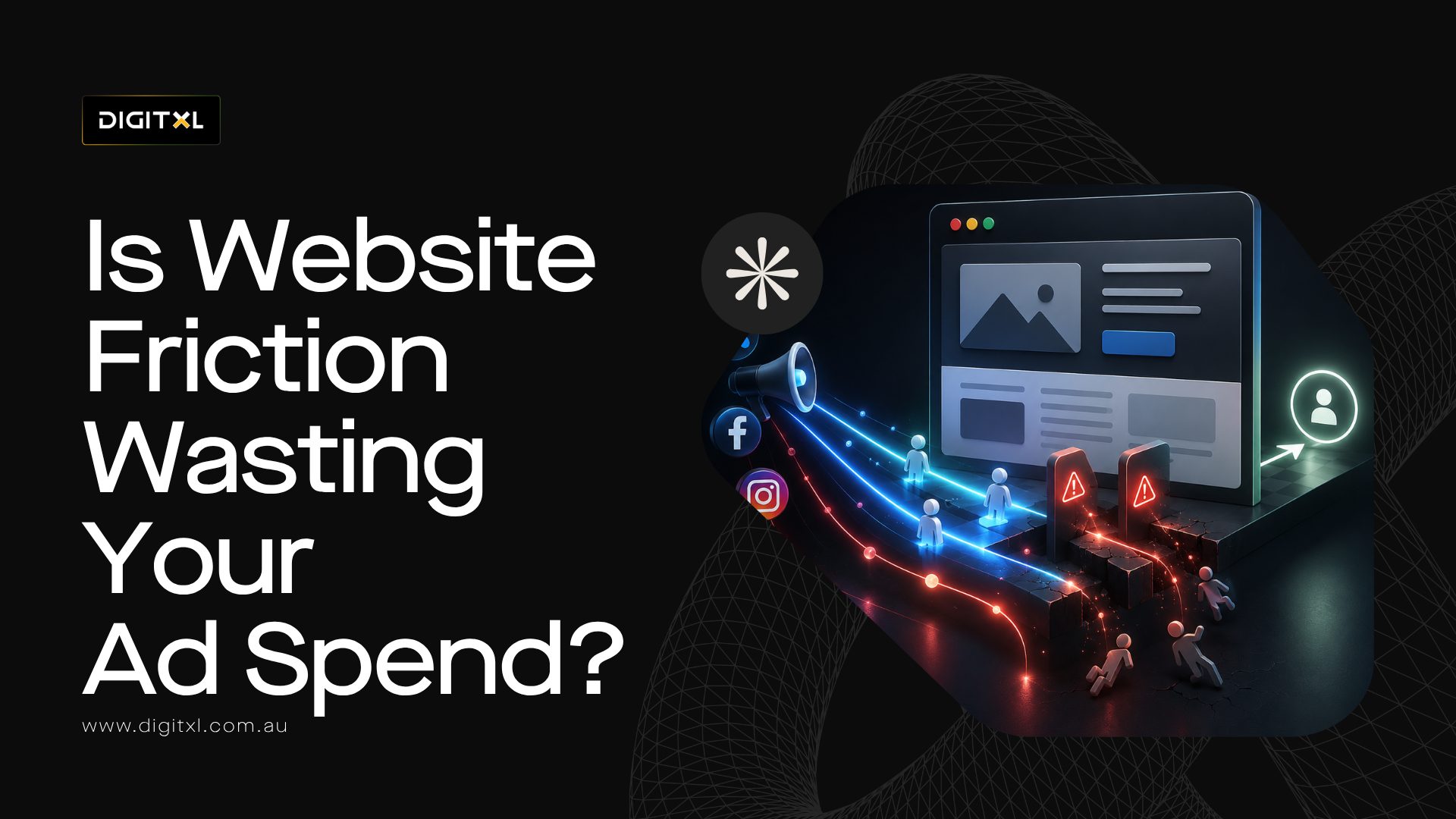
1. How to Optimise Local Business Websites Before Spending More on Ads
To understand how to optimise local business websites, start by reviewing the full customer journey. Check whether visitors can quickly understand your service, trust your business, find local proof, take action and complete the enquiry process without confusion.
The most important areas to review are:
- Landing page clarity
- Local SEO intent
- Mobile experience
- Call-to-action placement
- Form length
- Page speed
- Reviews and trust signals
- Service area information
- Phone and form tracking
- GA4 conversion data
If these areas are weak, spending more on ads may increase traffic without improving leads.
2. Why CRO Matters for Adelaide Businesses
Local customers often make decisions quickly. They may search for a plumber, dentist, accountant, builder, lawyer, restaurant, consultant or local store and compare several options within minutes.
If your website is slow, unclear or difficult to use, they may leave and choose a competitor.
For conversion rate optimisation Adelaide campaigns, the goal is to find what is stopping users from taking action. Common issues include unclear service pages, hidden phone numbers, long forms, weak reviews, poor mobile layouts or missing local proof.
Even small friction points can cost leads.
For example, if a visitor wants a quote but cannot find a clear enquiry button, they may not keep looking. If your phone number is not easy to tap on mobile, they may call another business instead.
3. CRO and Local SEO Should Work Together
SEO helps people find your business. CRO helps more of those visitors become customers.
Many businesses focus on How to Improve Local SEO Rankings, but rankings alone are not enough. A page can rank well and still fail to convert if it does not answer the visitor’s questions or make the next step easy.
For example, a local service page may rank for “emergency electrician Adelaide”, but if the page has no reviews, no clear phone number and no fast-response message, the visitor may leave.
A better approach is to review SEO and CRO together.
| SEO Question | CRO Question |
| Are people finding the page? | Are they taking action after landing? |
| Is the page ranking locally? | Does the page explain the service clearly? |
| Are service pages indexed? | Are forms, calls and bookings easy? |
| Are keywords bringing traffic? | Is the traffic becoming leads? |
| Is the Google Business Profile visible? | Does the page show enough trust? |
This helps local businesses avoid a common mistake: improving visibility while ignoring the website experience.
3.1 Review the Landing Page Message
The first thing to check is whether the page clearly explains what the business does.
A visitor should understand three things within a few seconds:
- What service you provide
- Where you provide it
- What they should do next
For example, “Professional Cleaning Services in Adelaide” is clearer than “Quality Solutions for Every Home”.
The page should also explain who the service is for. Are you helping homeowners, small businesses, clinics, restaurants, builders or ecommerce brands?
Confused visitors rarely convert. Clear messaging should always be one of the first CRO checks.
3.2 Match the Page to Search Intent
Search intent means what the user actually wants when they search.
Someone searching “how to clean carpets” may want advice. Someone searching “carpet cleaning Adelaide quote” is closer to booking.
If both users land on the same generic page, conversions may suffer.
For local businesses, each page should match the type of search.
| Search Type | Page Requirement |
| Informational | Helpful guide, FAQs and internal links |
| Service-based | Clear service details and enquiry CTA |
| Local intent | Adelaide, suburb and service area details |
| Urgent need | Phone number and fast booking option |
| Comparison | Reviews, proof and pricing guidance |
This supports both local SEO performance and conversion quality.
3.3 Make Local Trust Signals Visible
Local customers want proof that your business is real, reliable and relevant to their area.
Strong trust signals include:
- Google reviews
- Customer testimonials
- Adelaide service area details
- Local case studies
- Before-and-after examples
- Industry licences
- Awards or memberships
- Team photos
- Business address or service region
- Clear contact details
If these are missing or hidden, visitors may hesitate.
A cro agency Adelaide team would usually check whether trust signals appear near key decision points, such as service sections, enquiry forms and CTAs.
Trust should not sit only on a separate testimonials page. It should support the customer while they are deciding whether to enquire.
3.4 Improve Calls to Action
A call to action tells users what to do next.
Common local business CTAs include:
- Call now
- Request a quote
- Book an appointment
- Make an enquiry
- Get a free audit
- Check availability
- Visit our store
The issue is that many websites either use weak CTAs or place them too far down the page.
Your CTA should appear:
- Above the fold
- After key service information
- Near reviews or proof
- At the end of the page
- In an easy-to-tap mobile format
The goal is not to add buttons everywhere. The goal is to make the next step clear when the visitor is ready.
3.5 Shorten and Simplify Forms
Forms are one of the most common conversion friction points.
If a form asks for too much information too early, users may abandon it.
Review:
- Number of fields
- Required fields
- Mobile usability
- Error messages
- Confirmation message
- Spam protection
- Tracking setup
- CRM integration
For many local businesses, a simple enquiry form works better than a long form.
Ask only for what you need to respond properly. Extra information can be collected later during the call or follow-up process.
3.6 Review the Mobile Experience First
Most local searches happen on mobile. People may be comparing options at work, at home, in the car or while they are close to your location.
Mobile issues can quietly reduce conversions.
Check:
- Is the phone number easy to tap?
- Is the page fast?
- Is the CTA visible?
- Is the form easy to complete?
- Is text readable?
- Are images slowing the page?
- Are pop-ups blocking content?
- Is navigation simple?
A page can look fine on desktop but lose leads on mobile. For local businesses, mobile CRO should be reviewed before increasing ad spend.
3.7 Use Analytics to Find Friction
CRO should not rely only on opinion.
Use GA4, Google Search Console, Microsoft Clarity, heatmaps and form tracking to find where users drop off.
Review:
- Landing page conversion rate
- Scroll depth
- CTA clicks
- Form starts
- Form submissions
- Phone clicks
- Booking clicks
- Exit rate
- Traffic source
- Device type
- Page speed
- Enquiry quality
For example, if users scroll but do not click the CTA, the offer may not be strong enough. If users start a form but do not submit, the form may be too long or confusing.
This is where data turns CRO into a practical improvement process.
3.8 Improve Local SEO Pages for Conversions
Local SEO pages should not be written only for rankings. They should also help visitors make a decision.
To improve local SEO rankings and conversions, service pages should include:
- Clear service description
- Adelaide or suburb relevance
- Problems the service solves
- Who the service is for
- Reviews or local proof
- FAQs
- Pricing guidance where possible
- Strong internal links
- Clear enquiry CTA
- Schema markup where relevant
A page targeting an Adelaide service should not read like a generic page with the city name added. It should speak to local customers and explain why the business is a suitable choice.
This is where How to Improve Local SEO Rankings connects directly with CRO. Better local pages should bring the right traffic and help that traffic convert.
3.9 Test Before Increasing Ad Spend
Before spending more on ads, test whether the current website can convert the traffic it already receives.
Start with small CRO improvements such as:
- Clearer headline
- Stronger CTA
- Shorter form
- Better reviews placement
- Faster mobile page
- More useful FAQs
- Clearer service area content
- Better phone tracking
- Improved thank-you page tracking
For example, if a business receives 1,000 visits and converts 2% of users, it gets 20 enquiries. If CRO improves the conversion rate to 3%, the same traffic generates 30 enquiries.
That is why fixing friction before scaling ads can be more efficient than simply buying more clicks.
4. Common Conversion Friction Issues
Local businesses often lose leads because of small but important issues.
Common problems include:
- Vague headlines
- Weak local proof
- Hidden phone numbers
- Long forms
- Poor mobile layout
- Slow pages
- No reviews near CTAs
- Unclear service areas
- Generic suburb pages
- Missing pricing guidance
- Broken tracking
- No thank-you page
- No call tracking
- Confusing navigation
These issues may look small, but together they can reduce the number of enquiries a website generates.
5. Practical CRO Checklist for Adelaide Businesses
Before increasing ad spend, review these areas:
| Area | What to Check |
| Message | Can visitors understand the service quickly? |
| Local proof | Are Adelaide reviews or service areas visible? |
| CTA | Is the next step clear and easy? |
| Form | Is the form short and mobile-friendly? |
| Mobile | Is the page fast and easy to use? |
| SEO | Does the page match local search intent? |
| Analytics | Are calls, forms and bookings tracked? |
| Trust | Are reviews, licences and proof easy to find? |
| Content | Does the page answer buyer questions? |
| Testing | Are changes measured before scaling ads? |
This gives local businesses a simple way to find friction before increasing marketing spend.
6. How a CRO Agency in Adelaide Can Help
A cro agency Adelaide businesses work with should do more than suggest design changes.
A strong CRO approach should include:
- Analytics review
- Landing page audit
- Local SEO review
- Form and CTA analysis
- Mobile usability review
- Heatmap review
- User journey analysis
- Conversion tracking validation
- Testing roadmap
- Reporting dashboard
The same applies to conversion rate optimisation Adelaide projects. The goal is not only to improve page design. The goal is to understand why visitors are not converting and fix the barriers that matter most.
For local businesses, this can help reduce wasted ad spend and improve the return from SEO, Google Ads and other marketing channels.
7. Final Thoughts
Before spending more on ads, Adelaide businesses should check whether their website is ready to convert the traffic they already have.
More traffic is useful only when the website can turn visitors into enquiries, bookings, sales or calls.
To improve results, review landing page clarity, local SEO intent, trust signals, CTAs, forms, mobile experience and analytics tracking.
For businesses asking how to optimise local business websites, the answer is to start with friction. Find where users hesitate, drop off or lose trust.
For businesses asking How to Improve Local SEO Rankings, the answer is not only more keywords or more pages. It is better local content, stronger trust signals and a website experience that helps visitors take action.
That is how CRO and local SEO work together to support better business outcomes.

 Previous