- CRO
CRO for B2B Websites: Turning Leads Into Qualified Opportunities
26 Aug 2025
B2B websites love to look busy
Everywhere you look there are gated PDFs, endless CTAs and demo forms with fields nobody wants to complete. The dashboards look impressive with the traffic up, downloads up, MQLs tagged. But when you ask what actually moved the pipeline, it’s usually nothing..
That’s the central B2B CRO problem. Too many sites are built to please reporting instead of prospects. CRO for B2B business, especially when guided by a specialised CRO agency, is the system that decides whether your site behaves like a genuine pre-sales asset or an expensive brochure.
1. What the best B2B companies get right
The difference is obvious when you look at the companies who’ve made their websites do the heavy lifting.
1.1 HubSpot
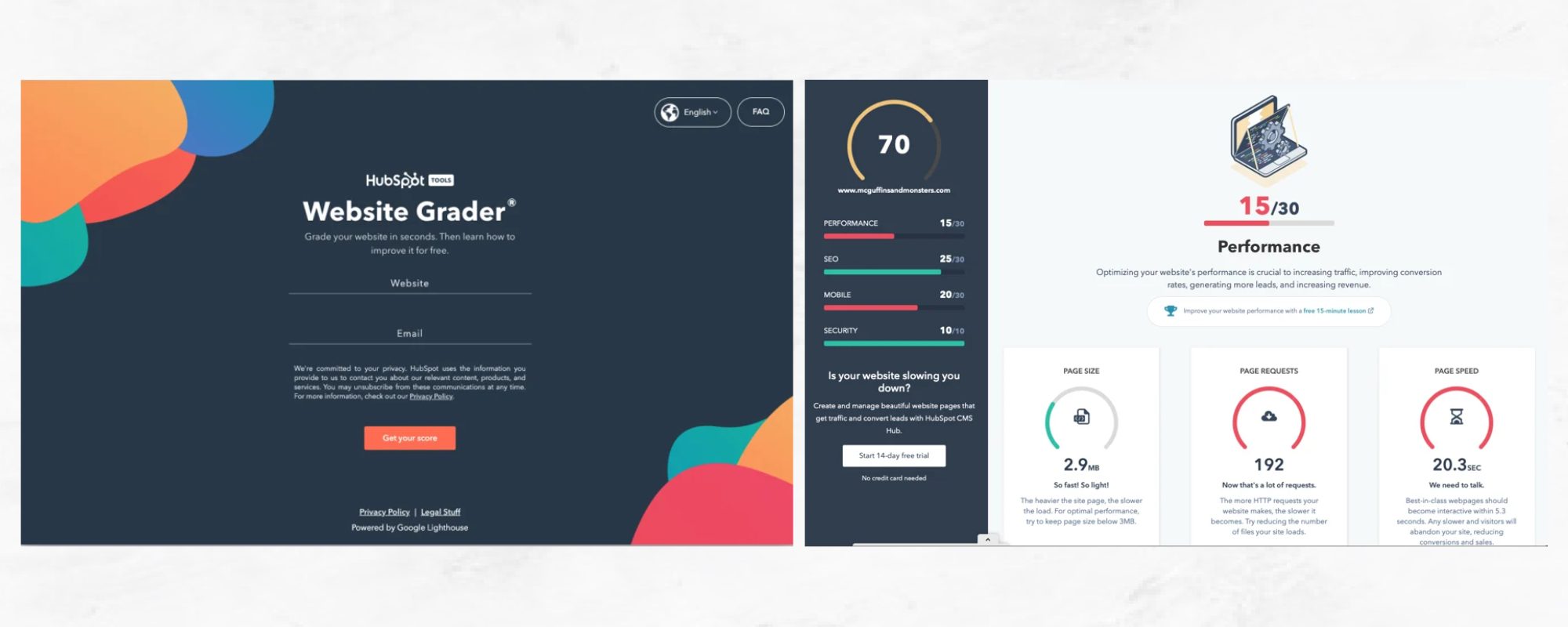
HubSpot didn’t become the inbound marketing reference point by locking everything behind a form. They built tools like the Website Grader which is a simple idea that delivers an instant report and earns data as a fair exchange. Visitors walk away with something useful, HubSpot walks away with better qualified leads. It feels natural and not transactional.
1.2 Slack
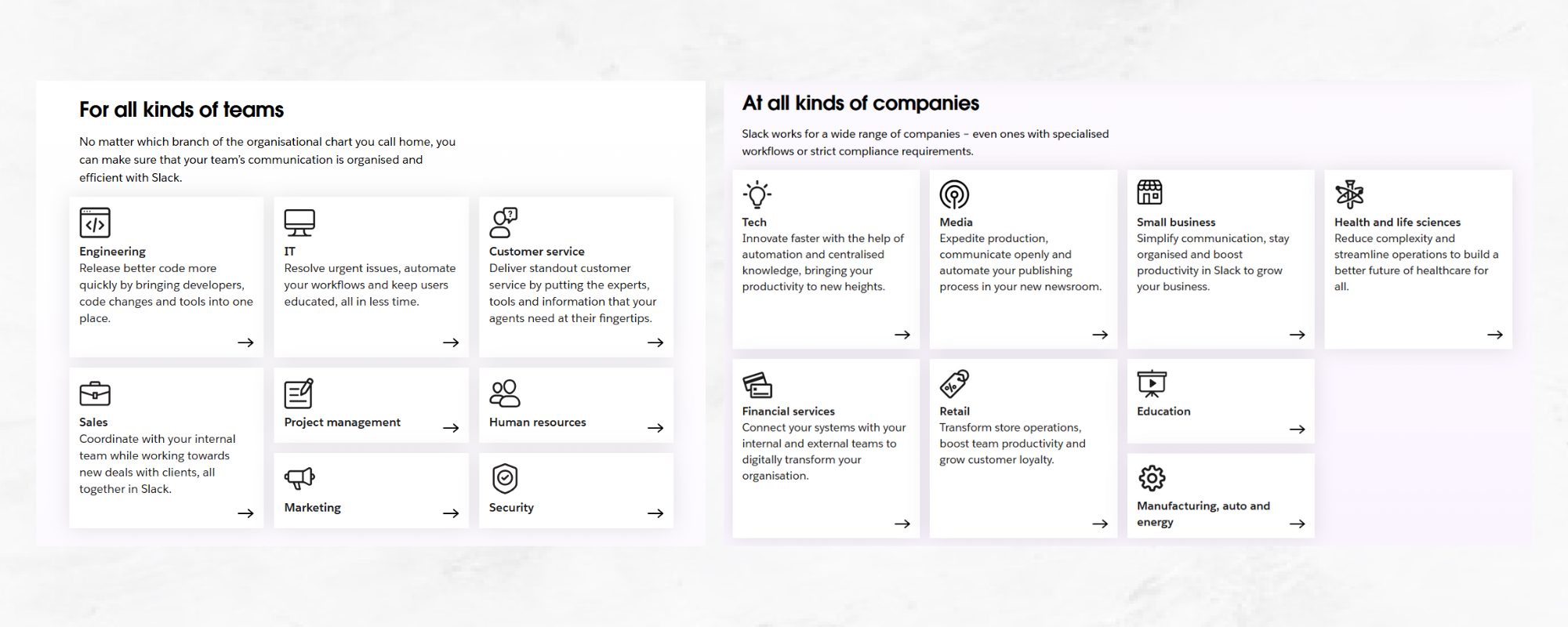
Slack knows one generic page can’t convince every buyer. Their site routes visitors into journeys that reflect their perspective. IT admins see security and integrations, team leads see collaboration outcomes, enterprise buyers see scale and governance. Each persona feels like the site is speaking their language. That’s conversion rate optimisation in B2B giving every decision-maker their own path to say yes.
1.3 Salesforce
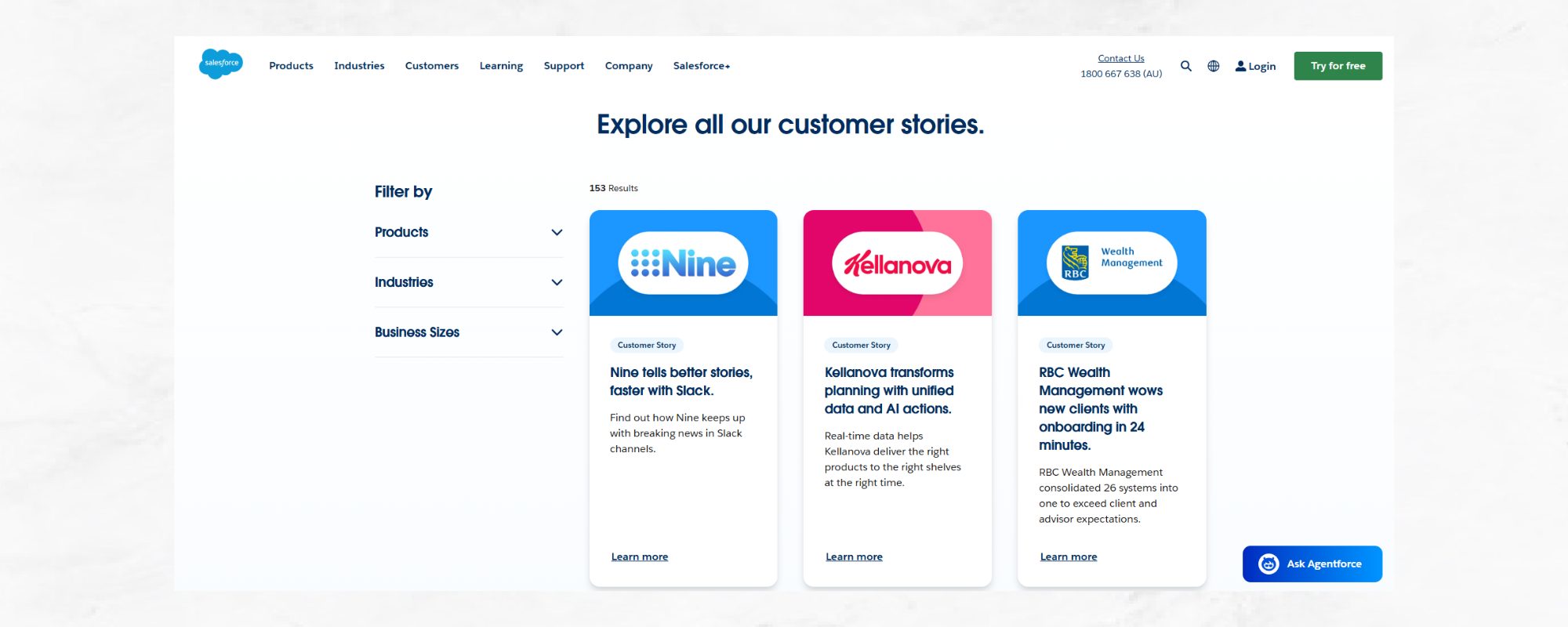
Salesforce fills the trust gap before a rep ever gets on a call. Their site is covered in case studies, ROI figures, customer logos, and testimonials. A CFO landing on Salesforce.com sees evidence immediately, not in a gated deck or a sales presentation. Objections are handled upfront, and conversations with sales start further along the decision path. CRO here is about proof placement.
1.4 Atlassian
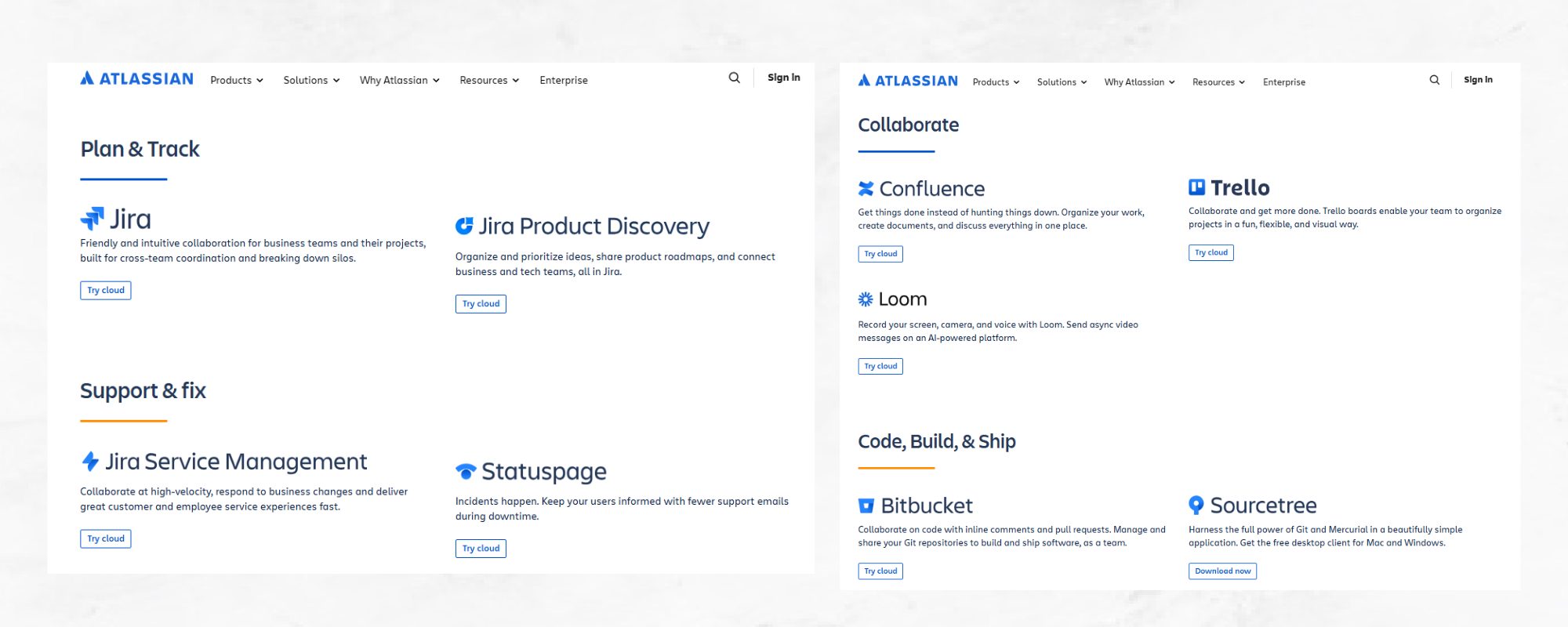
Atlassian lowers the barrier to entry completely. You can start using Jira or Confluence without talking to an SDR, handing over a credit card, or waiting for approval. The product sells itself because people experience value first-hand. CRO in this case is about removing the form altogether and letting the product do the work.
2. The leaks that bleed pipeline
Most B2B sites suffer death by a thousand cuts:
- Feature overload: landing pages that read like spec sheets, never tying features to business outcomes.
- Form fatigue: long, interrogative forms that demand trust before it’s earned.
- Proof hidden: case studies and ROI data tucked behind downloads instead of shown upfront.
- Slow response: inbound leads sitting cold for a week before anyone replies.
- Budget blind spots: no ROI framing visible until a CFO gets involved and vetoes the deal.
Individually these look like minor bumps but together they drain the funnel and analytics will call it a bounce.
3. The prospect’s reality
Inside the company, the website feels sharp. From the outside, it’s another story.
While testing, you land on your homepage looking for clarity and find jargon or you’re ready to engage but quit a form halfway through because the ask feels excessive, request a demo and don’t hear back until the following week.
Individually, none of those moments seem fatal. Together, they send one clear message: working with you will be harder than it should be. That’s when prospects quietly move on.
4. CRO as a sales lever
Boards don’t care about clicks or downloads. They care about qualified opportunities and deals that close. B2B conversion rate optimisation makes the connection between web performance and revenue performance visible.
The formula is straightforward:
Opportunities = (Visitors × Conversion Rate) × Lead Quality × Sales Velocity
Traffic fuels the top, but CRO multiplies the middle. Increase completions, improve qualification, and put ROI proof in front of decision-makers earlier. Those shifts save wasted sales hours, shorten deal cycles, and expand pipeline, the kind of changes you feel immediately.
5. What sales says vs what CRO fixes
Ask any sales team and you’ll hear the same frustrations: marketing sends junk leads, prospects stop replying, demos stall, deals die with finance, cycles drag on too long.
CRO addresses each of them directly. Qualification gets built into forms so reps talk to the right people. Automated follow-up means leads hear from you within hours, not days. Case studies and ROI calculators surface before the demo, making conversations more productive. Financial framing lives on the site, not hidden in a PDF. And landing flows are simplified so buyers don’t get stuck.
6. Pipeline killers vs pipeline builders
This one gets screenshotted in strategy decks:
Pipeline Killers
- “Book a demo” as the only CTA.
- Long, interrogative forms.
- Whitepapers as lead bait.
- Same nurture flow for every persona.
Pipeline Builders
- Multi-tiered CTAs: “See pricing,” “Compare plans,” “Download case study.”
- ROI calculators instead of PDFs.
- Fast-lane demo forms for high-intent visitors.
- Nurtures segmented by role: CFO, CTO, end-user.
7. 2025 standard for B2B CRO
In B2B, pipeline lives or dies on speed to value, credible proof, and clean hand-offs across a buying committee. Buyers expect to self-educate, try the product when possible, and talk to sales only when they’re ready. Build for that reality:
- Lead with financial clarity. Put ROI ranges, cost drivers, and a simple payback calculator on the site. Show the numbers before procurement asks.
- Give parallel paths by role. CFOs need commercial models and risk notes. CTOs want architecture, security, and integrations. End-users care about workflows and time saved. Route each role to its own evidence.
- Engineer the hand-off. Route by intent (demo, pricing, use case), alert the right rep instantly, and hold a response SLA measured in hours, not days.
- Treat forms like contracts. Ask only for what you use now. Prefer two-step or progressive profiling so the first step feels effortless.
- Surface proof where decisions happen. Case studies, outcomes, and timelines should sit beside CTAs, not three clicks deep or behind a gate.
- Build compliance into the flow. Use plain-English consent, explain why data is collected, and place trust cues right next to the action.
- Budget for speed. Target LCP under 2.5s, working autofill, one-tap calendar booking, and zero dead ends on mobile.
- Measure what sales feels. Track MQL→SQL rate, time-to-first-response, opportunity stage velocity, and form-field drop-off. Optimise against those, not vanity clicks.
8. Why outside perspective matters
Teams who live with their own site every day stop noticing the leaks.. The slow steps feel normal, long forms look “standard.” Case studies hidden behind PDFs don’t raise a flag because that’s how it has always been done. Familiarity blinds teams to the friction prospects feel.
That’s where a conversion rate optimisation agency earns its place. The right partner starts with evidence like research, heatmaps, replays, funnel forensics, sales feedback. They map where your funnel bleeds and prioritise the fixes that move revenue.
And context matters. A CRO agency Australia-based understands the quirks of local compliance, payment preferences, and buyer expectations. Offshore playbooks often miss those cultural and regulatory cues. That’s why a proper conversion rate optimisation service goes beyond “best practice” to build flows that actually work in your market.
9. Before You Go
In B2B, traffic is rarely the real issue.. the real problem is friction.
Every abandoned form, every cold lead, and every deal that falls apart is a sign of a leaking funnel. Conversion rate optimisation is the discipline that finds those leaks and closes them. When it is executed properly, a website stops acting like a glossy brochure and begins to operate like a pre-sales representative: qualifying prospects, building trust, and moving them closer to a decision.
At DIGITXL, CRO is pipeline work. Our focus is on turning sites that look busy into sites that generate revenue. If your dashboards are full but your team is still waiting for qualified opportunities, it’s time for a teardown. A trusted CRO agency can help you see the leaks clearly and close them fast.
10. FAQ
Why do so many B2B websites fail to move the pipeline?
Because they’re built to impress dashboards, not prospects – lots of gated PDFs, long forms, and generic CTAs, but very little clarity, proof, or speed to value. The result is traffic and MQLs on paper, with almost no impact on real qualified opportunities or closed revenue.
What does good B2B CRO look like in practice?
Leading B2B brands use their site as a true pre-sales asset: tools that give instant value (like graders or calculators), journeys tailored by role, and proof (case studies, ROI, logos) visible before a rep ever joins the conversation. The website lowers friction, answers objections early, and moves buyers closer to “yes” before sales gets involved.
What are the biggest “pipeline leaks” on typical B2B sites?
Common leaks include feature-heavy pages that don’t link to outcomes, long interrogation-style forms, proof hidden behind downloads, slow or no follow-up on inbound leads, and zero financial framing until late in the process. Each one feels small in isolation, but together they quietly kill momentum and push prospects away.
How can CRO directly support sales teams and pipeline quality?
CRO bakes qualification into forms, speeds up follow-up, and brings case studies, ROI figures, and pricing clarity into the journey earlier. That means reps spend more time with the right people, conversations start further along the decision path, and deals move faster because finance and technical stakeholders see what they need upfront.
What should B2B teams focus on for CRO in 2025?
Focus on speed to value, role-based paths, and friction-free hand-offs: clear ROI ranges, parallel journeys for CFO/CTO/end-users, fast-lane demo options, lean forms, and mobile-friendly flows with no dead ends. Measure what sales actually feels (MQL→SQL, time-to-first-response, stage velocity, form drop-off) instead of vanity clicks, and optimise against those signals.
Recent Posts



Case Studies
Business News Australia
On Track Meals