- SEO
Long-Term SEO: 7 Quiet SEO Strategies That Drive Results
17 Apr 2025
Simple moves. Smart structure. Real impact.
| Looking for top SEO tactics that don’t fade after a quarter? You’re in the right place.
SEO doesn’t need to be loud to work.
It just needs to be built properly — with focus, consistency, and a strong understanding of what’s helping and what’s just adding noise. Whether you’re doing everything in-house or partnering with a SEO agency, the principles are the same: clear structure, useful content, and patient iteration.
Here’s how we help companies build SEO that sticks around — through algorithm shifts, team changes, and shifting priorities.
2. Start with the 5 pages people land on
Instead of starting with what’s missing, start with what’s already working.
You probably have 5–10 pages doing most of the heavy lifting. These deserve your attention before anything else.
Check:
- Are they accurate?
- Do they reflect how you actually talk about your product or service today?
- Are they helpful for someone who’s just arrived, mid-decision?
3. Make your high-intent pages easier to understand
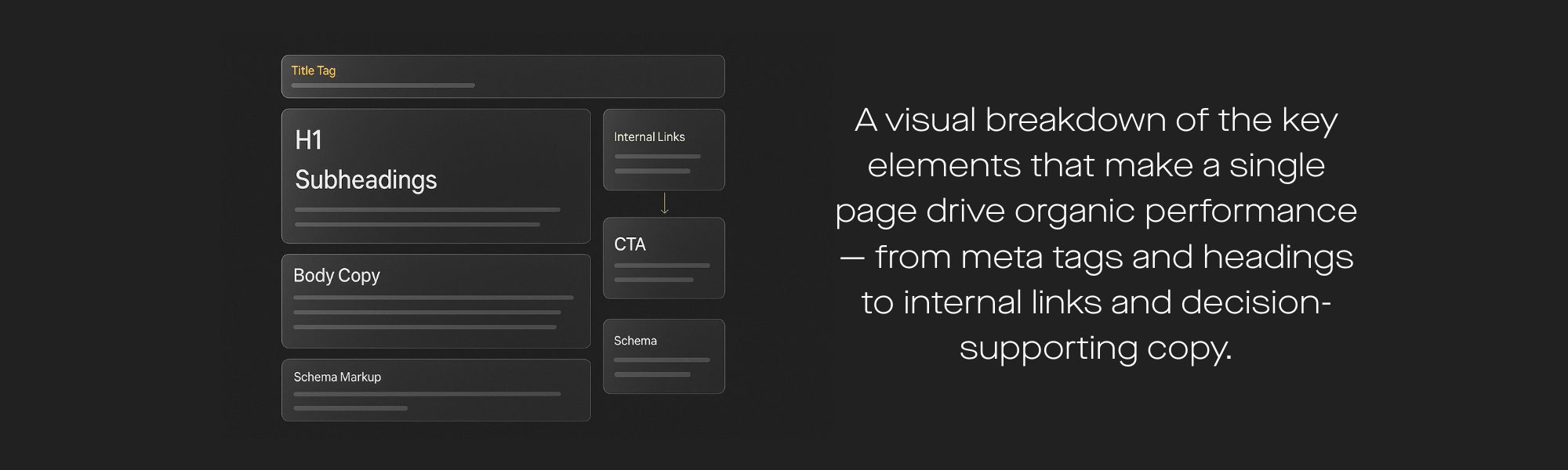
If someone lands on a category, product, or “what we do” page, they’re already closer to action. Help them move forward by giving them real information, not placeholder copy.
Instead of: “We help businesses scale with flexible architecture”
✅Try: “This platform helps you combine online + retail stock in one place — without rebuilding your backend.”
4. Build content that supports a decision
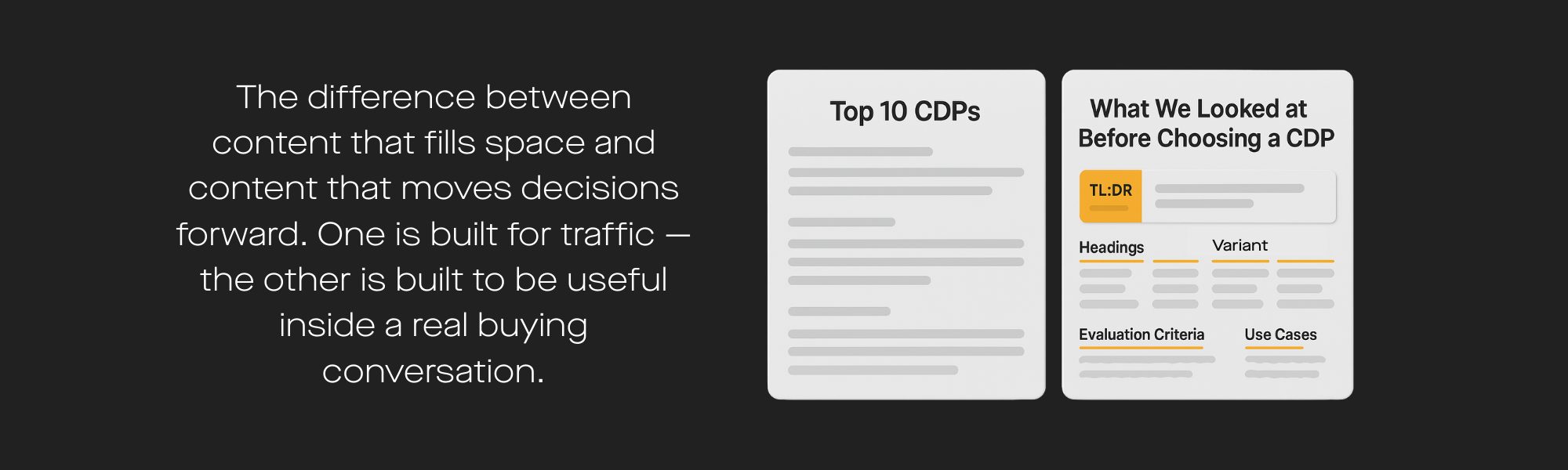
There’s a difference between a blog post that gets clicks and a piece someone bookmarks, shares with their team, or references on a call. We build for the latter.
Examples:
- Questions your sales team answers every week
- Internal training docs that explain how your product works
- Tools, checklists, or demos that help a user validate their thinking
5. Keep your site light and structured — for readers, not robots
Fast, easy-to-navigate websites win trust. It’s not the scores or plugins but reducing effort. Help people move through your site without needing to think twice.
What helps:
- Clear menus, clear page hierarchy
- Fewer unnecessary layers (no 3-click mazes)
- Logical internal links that guide, not overwhelm
6. Review and improve what’s already live before publishing more
You don’t need more content — you need stronger content. A good SEO strategy isn’t always about new pages, it’s often about maintaining and improving the ones that are already halfway there.
Monthly ritual worth doing:
- Pull pages ranking between positions 8–20
- Add clarity, stronger headers, better cross-links, and updated examples
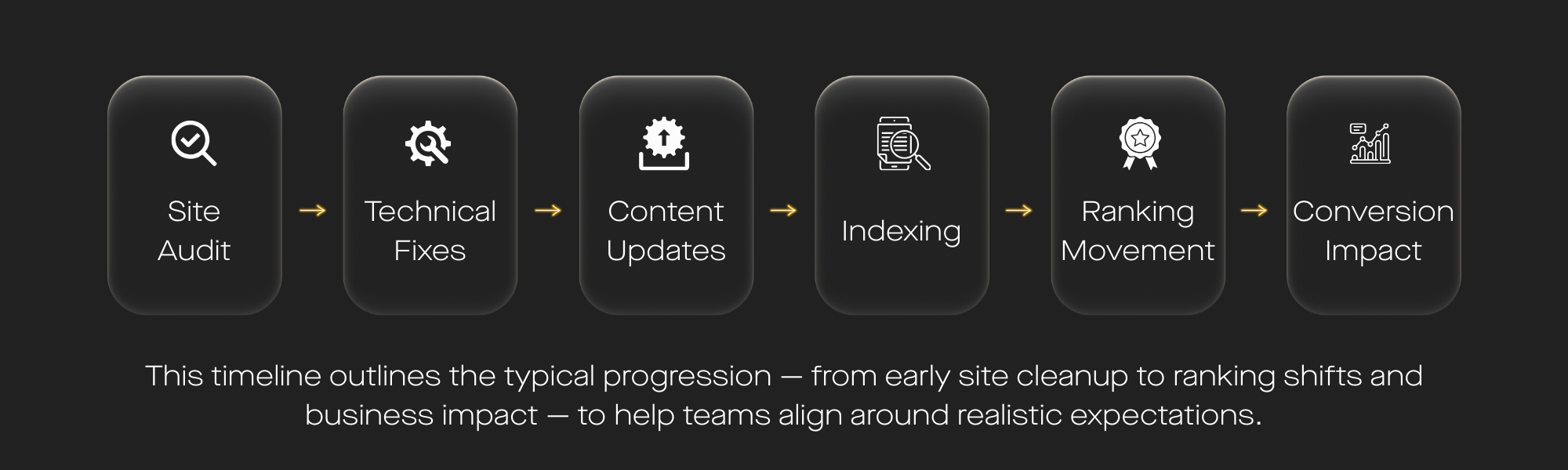
- Track impact over 30–60 days before publishing anything new
7. Write the way your audience speaks
People don’t search with buzzwords. They search like they think. The most useful content mirrors that is without overexplaining or overcomplicating.
Listen to:
- Internal team chats
- Prospect questions
- Common hesitations or misunderstandingsThat’s your language guide.
8. Treat SEO as part of how you build
The best SEO results come from cross-team awareness. Not just content and marketing, but product, dev, and design too. Everyone affects how visible (and usable) your site is — whether they know it or not.
Make SEO part of:
- Product and page naming
- Navigation and page structure
- Content briefing and reviews
It’s about building with awareness, not adding more…
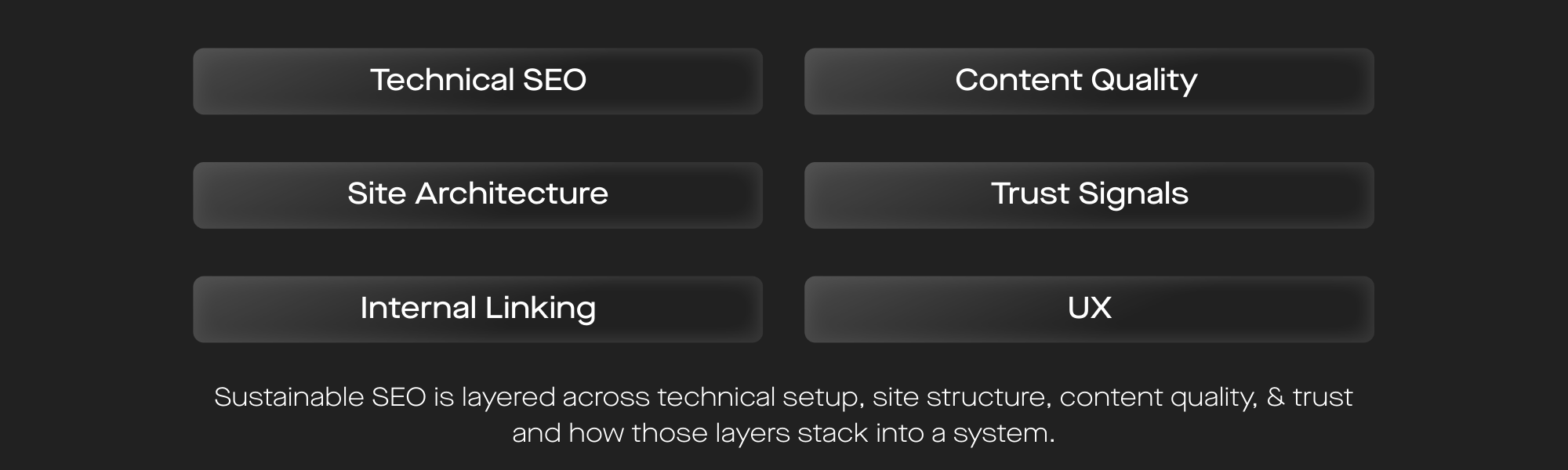
Still wondering, what are the best SEO techniques?
| The truth is, there’s no one-size-fits-all answer — but the most consistent wins come from teams that stop treating SEO like a checklist and start treating it like infrastructure.
10. The takeaway?
SEO done well isn’t loud. It’s calm, steady, and useful.
It supports your sales process, aligns with how you work, and becomes a quiet driver of long-term value.
If that’s the kind of strategy you’re building — we’d be glad to support it.
DIGITXL builds SEO that respects your product, your team, and your time.
→ Want to talk through how to make this work for your site? Let’s set up a quick call.
11. FAQ
1. What do you mean by “quiet” or long-term SEO?
Long-term SEO is about building a site that’s structurally sound, genuinely useful, and aligned with how your customers search and decide—not chasing short-lived tricks. It focuses on steady improvements that keep working through algorithm updates, team changes, and shifting priorities.
2. Where should I start if I want more sustainable SEO results?
Begin with the 5–10 pages that already get most of your traffic, such as key blogs, category pages, or “what we do” pages. Make sure they’re accurate, up to date, and actually help someone who’s mid-decision instead of just ticking an “SEO content” box.
3. What are “high-intent pages” and how should I optimise them?
High-intent pages are where visitors are closer to taking action, like product, service, pricing, or key category pages. They should use clear, concrete language, show how you solve real problems, and make the next step obvious and low-effort.
4. Do I really need more content, or should I improve what I already have?
Often you don’t need more pages—you need stronger ones. Regularly review pages already ranking around positions 8–20, then refine headings, structure, examples, and internal links, and watch how those changes affect performance before publishing anything new.
5. How can my team treat SEO more like “infrastructure” than a checklist?
Bring SEO thinking into product naming, navigation, page layout, and content briefs rather than adding it at the end. When marketing, product, design, and dev teams all consider findability and clarity, SEO becomes a quiet backbone for the whole site instead of an isolated task.

Recent Posts


Case Studies
Business News Australia
On Track Meals